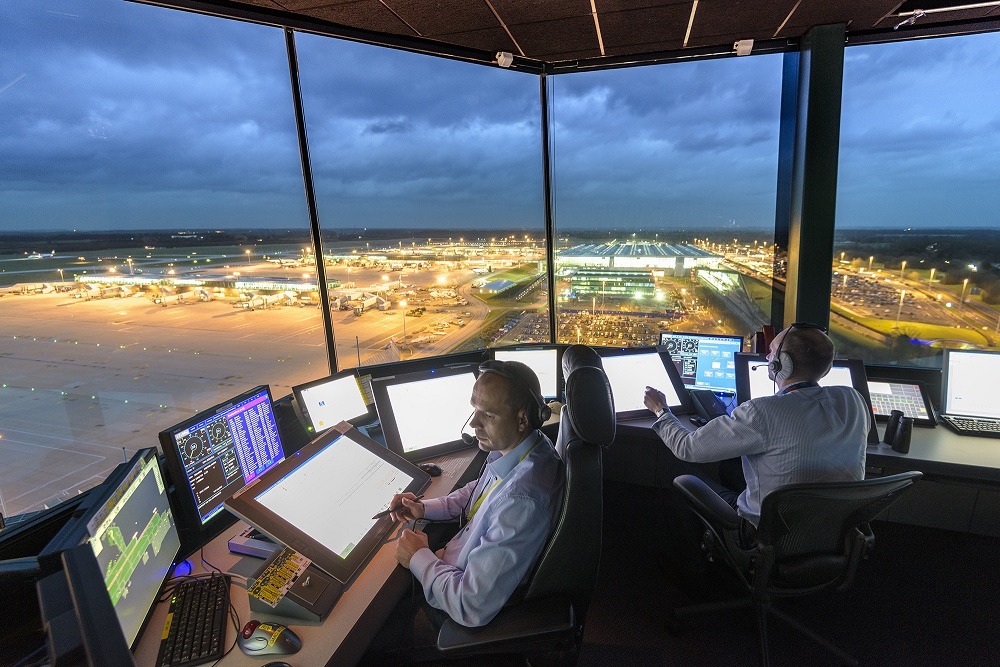
Air Traffic Management Automation System
Intelligent Solutions for Next-Generation Airspace Operations
Transforming Air Traffic Control Through Advanced Automation
The Air Traffic Management (ATM) Automation System represents a paradigm shift in how airspace is managed, monitored, and optimized. As global air traffic continues to expand, traditional manual control methods face capacity constraints, operational inefficiencies, and increased workload pressures. ATM automation systems integrate cutting-edge technologies including real-time data processing, trajectory-based operations, conflict detection algorithms, and cooperative surveillance to enhance safety, increase airspace capacity, and improve operational efficiency.
Modern ATM automation platforms serve as the digital backbone of airspace operations, replacing fragmented legacy systems with unified architectures that enable seamless information sharing among all aviation stakeholders. These systems support strategic air traffic flow management (ATFM) and tactical air traffic control (ATC) services, providing controllers with enhanced situational awareness, predictive analytics, and automated decision-support tools.

The Challenge: Modernizing Air Traffic Control
Growing Demand and Capacity Constraints
Global air traffic growth is projected to exceed existing ATC capacity, potentially contributing to increased delays, missed connections, and operational bottlenecks. Traditional systems relying on voice communications, manual coordination, and paper-based flight progress strips cannot scale to meet future demand.
Safety and Efficiency Imperatives
Air traffic controllers manage increasingly complex airspace with multiple intersecting flight paths, weather constraints, and dynamic traffic patterns. Manual processes increase cognitive workload and leave room for human error. The aviation industry demands solutions that enhance safety through automated conflict detection, separation assurance, and real-time hazard monitoring.
System Integration Challenges
Many air navigation service providers (ANSPs) operate with fragmented automation systems developed over decades, resulting in data silos, incompatible interfaces, and limited interoperability. Modernization requires seamless integration of legacy systems while enabling rapid adoption of new capabilities.
Solution: Comprehensive ATM Automation Architecture
Core Functional Areas Information Exchange:
ATM automation improves three major operational domains
Information Exchange: Automated collection and distribution of flight plan data, NOTAMs, meteorological information, and aeronautical data through centralized systems with internationally standardized protocols.
Safety Tools: Conflict identification algorithms, separation assurance systems, collision avoidance technologies, and automated alert mechanisms that mitigate human error and enhance situational awareness.
Efficiency Tools: Planning optimization, trajectory modeling, dynamic airspace management, and resource allocation systems that maximize throughput while maintaining safety margins.
Key System Components
| Component | Description |
| Flight Data Processing System (FDPS) | Processes flight plans, tracks aircraft intent, manages 4D trajectory data, and facilitates coordination between ATC sectors and facilities |
| Radar Data Processing System (RDPS) | Integrates primary and secondary surveillance radar data with ADS-B inputs for real-time aircraft position tracking. |
Automated Display | Provides controllers with customizable, user-friendly interfaces showing aircraft positions, flight data tags, weather overlays, and conflict alerts. |
Conflict Detection & Resolution | Continuously monitors flight trajectories, identifies potential conflicts, and suggests optimal resolution strategies to maintain separation standards. |
| Air Traffic Flow Management (ATFM) | Balances demand with capacity through strategic planning, slot allocation, flow restrictions, and dynamic traffic optimization. |
Controller-Pilot Data Link (CPDLC) | Enables digital text-based communication between controllers and pilots, reducing voice channel congestion and miscommunication risks. |
Technology Advantages
Enhanced Safety Through Automation
Proactive Conflict Detection: Advanced algorithms continuously analyse flight trajectories and predict potential conflicts minutes in advance, enabling early intervention
Automated Alerts: Real-time warnings for separation violations, airspace incursions, weather hazards, and system anomalies reduce reaction time and prevent incidents.
Redundant Architecture: Dual-channel processing with functional redundancy eliminates single points of failure, ensuring continuous operations even during system faults